
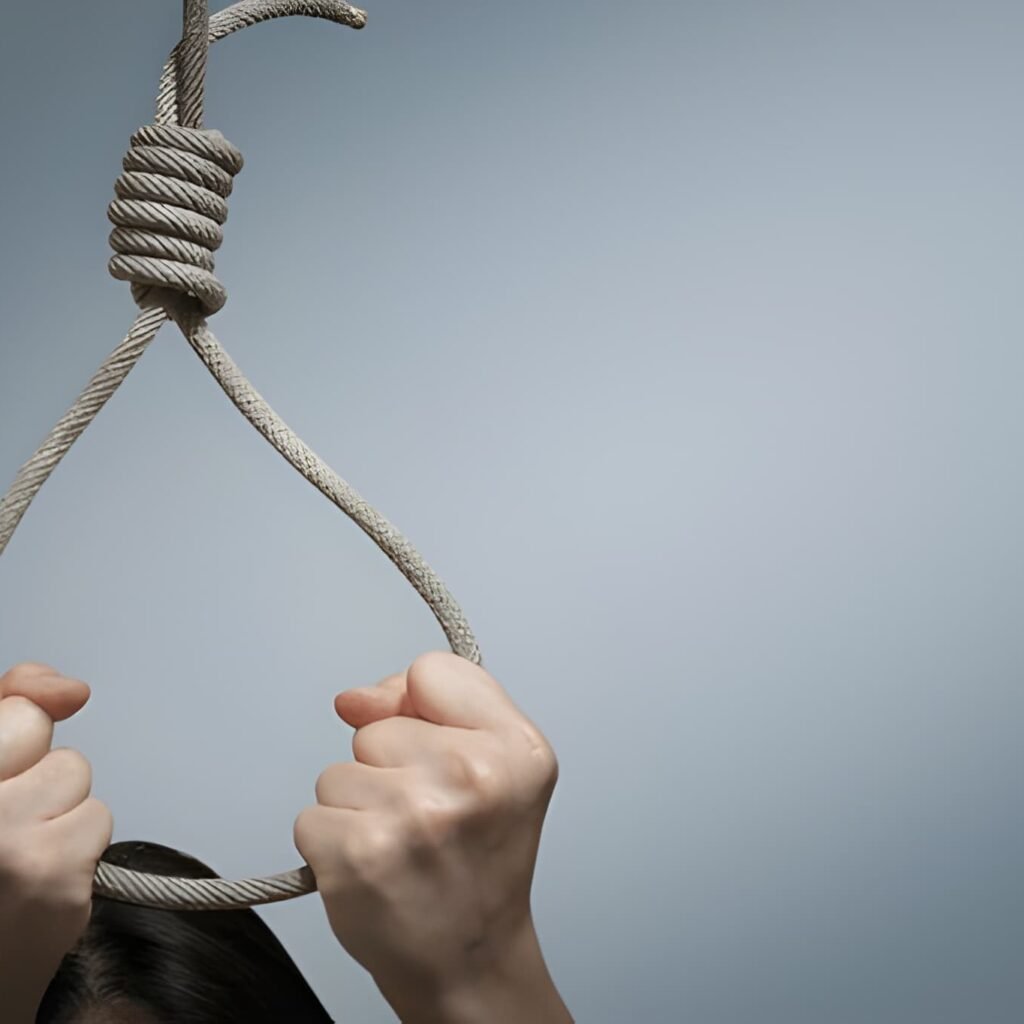
Article At A Glance
- Section 108 BNS replaces old IPC law – From July 1, 2024, abetment of suicide is governed under the new criminal code.
- Intent must be clearly proven – There must be strong evidence of instigation, conspiracy, or intentional aid with guilty intention.
- Mere harassment is not enough – Arguments, workplace stress, or emotional remarks do not amount to abetment without direct incitement.
- Serious but strictly examined offence – Punishable up to 10 years, yet courts require clear, direct proof before conviction.
With the implementation of the Bharatiya Nyaya Sanhita, 2023 (BNS) effective from July 1, 2024, the offence of abetment of suicide is now governed by Section 108 BNS, which replaces Section 306 of the erstwhile Indian Penal Code, 1860 (IPC).
Section 108 BNS keeps the same basic idea as the old law, but fits into the updated criminal system.
What does abetment of suicide mean under Section 108 BNS?
“If any person commits suicide, whoever abets the commission of such suicide, shall be punished with imprisonment of either description for a term which may extend to ten years, and shall also be liable to fine.”
The section says: If a person commits suicide, anyone who abets (helps or encourages) that suicide can be punished with jail time up to 10 years (simple or hard labour) and a fine.
Abetment is explained in Section 45 BNS (like old Section 107 IPC). It includes three main ways:
· Instigation: Actively provoking, encouraging, or urging the person to commit suicide.
· Conspiracy: Agreeing with others to facilitate the act.
· Intentional Aid: Providing assistance through any act or illegal omission that directly enables the suicide.
To prove someone guilty, the court must be fully sure of two things:
1. The person really committed suicide.
2. The accused abetted it on purpose (with guilty intention or “mens rea”). This means their actions or ongoing behaviour directly drove the person to feel they had no other choice but to end their life.
Normal arguments, everyday fights, family quarrels, or angry words do not count. There must be a clear, close connection between what the accused did and the suicide.
Note: If the person who died was a child, someone with a mental illness, confused (delirious), or under the influence of drugs/alcohol, Section 107 BNS applies instead. This has much stricter punishment, which can include life imprisonment or even death in extreme cases.
What do Supreme Court decisions say? (These apply to Section 108 BNS too)
The Supreme Court has consistently emphasised that courts and police must exercise great care when handling these charges. Old decisions under Section 306 IPC still guide the new law.
In recent 2025 cases, the Court has repeated:
- In 2025 judgments, the Court has stressed that mere workplace harassment, administrative actions, or insulting remarks (e.g., in fits of anger) do not constitute abetment without clear mens rea and proximate incitement.
- Cases involving official relationships (employer-employee) require even higher proof thresholds, as normal professional stresses cannot be equated with instigation.
- The Court has quashed several proceedings in 2025, reiterating that hypersensitivity of the deceased or unrelated personal factors cannot lead to conviction.
- Low conviction rates persist, reflecting the stringent requirement for direct evidence of intent.
Additional Read: Marital Rape & Forced Unnatural Sex Under BNS & BNSS
Punishment and Nature of the Offence
- Punishment:
Imprisonment up to 10 years (rigorous or simple) and fine.
- Type of offence:
It is cognizable (police can arrest without warrant), non-bailable (bail not automatic; court decides), non-compoundable (cannot be settled privately), and triable by Court of Session.
Bail applications are often favorably considered where the prima facie case is weak, particularly in absence of direct instigation.
How to defend against such claims under Section 108 BNS
Many times, families file cases out of deep grief or anger, even when no real fault exists. We have helped many clients in these situations. Good defences include:
- No guilty intention or direct link to the suicide.
- The suicide happened because of other reasons, like mental health struggles or financial problems.
- Suicide notes or claims need strong proof; just naming someone is not enough.
Courts readily exercise powers under Section 482 BNSS (equivalent to Section 482 CrPC) to quash baseless FIRs and prevent misuse.
Final Thoughts on Section 108 BNS: Preventing Misuse While Protecting Justice
Section 108 BNS is meant to punish real cases where someone deliberately encourages or helps another person to commit suicide, while also making sure the law is not misused against innocent people.
Suicide is usually a very sad and complicated situation, often caused by mental health problems or heavy life pressures. In these cases, what is needed most is kindness, understanding, and help—not treating every case as a crime.
In 2025, the Supreme Court clearly warned that this section should not be used lightly or just to make grieving families feel better, especially when there is no strong proof of real intention or direct involvement
If facing allegations under Section 108 BNS or related provisions, consult experienced counsel immediately. Our team specialises in criminal defence, ensuring robust protection of your rights.